Top-Rated Stud Finders for Plaster and Lath Walls: Expert Buying Guide
Locating structural supports behind plaster and lath requires specialized tools, as traditional sensors often struggle with the thickness and density of these older wall types. Whether you are remodeling a historic home or performing basic repairs, selecting the right detector depends on whether you need to identify hidden metal, wood studs, or live electrical wires. Magnetic options offer a straightforward, battery-free approach for detecting metal fasteners, while advanced radar and electronic scanners provide deeper penetration for complex wall assemblies. This guide compares various detection technologies to help you choose a reliable tool for your specific workshop or home improvement project, ensuring you can locate studs accurately before drilling or cutting into sensitive surfaces.
When working with plaster, the primary challenge is the inconsistent wall thickness and the presence of metal lath, which can create false positives for standard sensors. Magnetic finders are highly effective in these environments because they locate the nails or screws securing the lath to the studs, effectively pinpointing the stud position regardless of surface density. Meanwhile, electronic multi-material scanners offer broader functionality by detecting live wires and various materials simultaneously. By understanding the functional differences between magnetic, radar, and electronic detection methods, you can select a tool that balances ease of use with the precision required for challenging plaster wall applications.
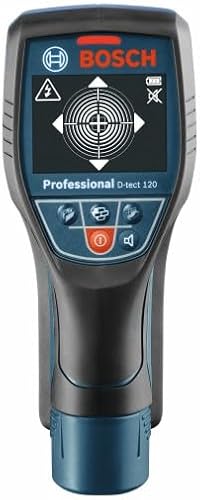
1. BOSCH D-TECT120 Professional Wall Scanner and Floor Radar, Multi-Material Stud Finder for Wood, Metal, and Live Wire Detection (Includes Battery and Charger) | Detects wood, metal and live wires, battery and charger incl
The Bosch D-TECT120 is a professional-grade wall scanner designed for multi-material detection. This unit utilizes radar technology to identify wood, metal, and live wires behind various wall surfaces. As a versatile tool for contractors and serious DIYers, it provides a comprehensive approach to scanning walls and floors. The package includes the necessary battery and charger, ensuring the device is ready for operation. By offering detection for multiple material types simultaneously, it serves as a high-level solution for those who need to map out wall interiors before beginning invasive work. Its design focuses on professional accuracy, making it a robust choice for complex projects where identifying hidden utilities is just as critical as locating structural supports.
Best for: Professionals requiring multi-material detection
Check on AmazonHighlights
- Radar technology for deep scanning
- Detects wood, metal, and live wires
- Includes battery and charger
- Suitable for walls and floors
Keep in mind
- May require a learning curve for radar interpretation
- Lower user rating compared to simpler magnetic alternatives

2. Zircon® MetalliScanner® m40 Electronic Metal Detector, Up to 4 in. Deep | Ideal for lath and plaster walls and reclaimed lumber; locates hidden metal before drilling, cutting or remodeling
Specifically engineered for challenging surfaces, the Zircon MetalliScanner m40 is an electronic metal detector capable of scanning up to 4 inches deep. It is explicitly marketed as an ideal solution for lath and plaster walls, where identifying the hidden metal framework is essential for safety. By locating metal pipes, conduit, or nails before drilling, this tool helps users navigate the complexities of remodeling older structures. The m40’s ability to peer through deep surfaces makes it a specialized instrument for projects involving reclaimed lumber or thick wall assemblies. Its design emphasizes precision in metal detection, providing a focused solution for users who prioritize identifying metallic obstructions over general wood stud detection.
Best for: Locating metal in thick or historic plaster walls
Check on AmazonHighlights
- Scans up to 4 inches deep
- Specialized for lath and plaster
- Electronic metal detection
- Prevents damage during remodeling
Keep in mind
- Focused primarily on metal detection
- Lacks wood-specific sensor technology
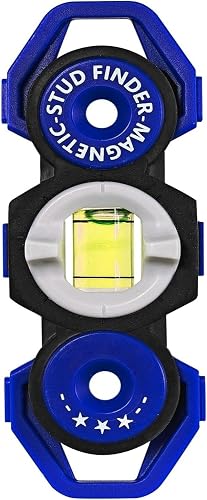
3. Magnetic Stud Finder and Leveler, Pocket Size and Battery Free | Strong magnets quickly locate studs, screws, & nails in drywall & plaster. Built-in level, hands-free design 050044
This magnetic stud finder features a battery-free, pocket-sized design that relies on strong magnets to locate fasteners. By identifying the screws or nails holding drywall and plaster to the studs, it allows users to find structural members quickly. The unit includes a built-in level, enhancing its utility for mounting tasks and installation projects. Its hands-free design is intended to simplify the marking process, allowing users to keep their focus on the task at hand. Because it requires no power source, it is a reliable, always-ready tool for any toolkit. It is a straightforward option for those who prefer mechanical detection methods over electronic sensors, particularly when working on standard residential walls.
Best for: Quick, battery-free stud detection
Check on AmazonHighlights
- Strong magnet for fastener detection
- Built-in level included
- No batteries required
- Compact, pocket-sized design
Keep in mind
- Cannot detect live electrical wires
- Relies on the presence of metal fasteners

4. Kreg KMM1000LZ - Kreg Magnetic Stud Finder with Laser-Mark - Stud Finder & Wall Scanner - Magnetic Stud Finder Tool - with Precise Stud Magnet
The Kreg KMM1000LZ integrates magnetic stud detection with a laser-mark feature to provide a dual-purpose tool for wall scanning. This device is designed to locate studs by finding the metal fasteners beneath the surface, while the integrated laser helps mark the precise location for drilling. By combining these two functions, it streamlines the process of preparing a wall for fasteners or mounts. The tool is designed for ease of use, making it an accessible option for home improvement enthusiasts who want to avoid the common frustrations of electronic stud finders. Its focus on accuracy and convenience makes it a practical addition to a home workshop, particularly for those looking to improve efficiency during installation tasks.
Best for: Precise stud marking and alignment
Check on AmazonHighlights
- Integrated laser-mark feature
- Magnetic fastener detection
- Streamlined workflow design
- High user satisfaction rating
Keep in mind
- Limited to magnetic detection capabilities
- Requires consistent fastener placement

5. Original StudPoP Moving Magnet Stud Finder, for Any Construction, 1" Magnet
The Original StudPoP is a simple, effective magnetic stud finder utilizing a 1-inch magnet to locate hidden screws and nails. Its unique design is meant to work across various construction types, providing a visual indicator when it makes contact with a metal fastener. By eliminating the need for complex calibration or batteries, it provides an uncomplicated solution for finding studs in plaster or drywall. Its design is minimalist and durable, aimed at users who value a tool that works immediately upon contact. As a specialized magnetic tool, it excels in environments where fasteners are present, offering a reliable way to identify structural supports without the potential for electronic interference or calibration errors.
Best for: Simple, reliable magnetic detection
Check on AmazonHighlights
- 1-inch magnet for strong contact
- No battery or calibration needed
- Works on multiple wall types
- Highly portable design
Keep in mind
- Requires metal fasteners to be present
- Lacks additional features like levels or lasers
How to choose
Detection Technology
When working with plaster, selecting the right sensor type is vital. Magnetic tools like the Magnetic Stud Finder and Leveler, Kreg KMM1000LZ, and StudPoP utilize powerful magnets to locate the screws or nails embedded in studs behind plaster walls. These are battery-free and straightforward to operate. Conversely, electronic scanners like the Bosch D-TECT120 and Zircon MetalliScanner m40 use radar or metal detection to identify hidden materials. Electronic units often provide broader capabilities, such as detecting live wires or deep-seated metal, whereas magnetic finders excel at pinpointing the specific fasteners used to secure lath and plaster to the underlying structural framing.
Plaster Compatibility
Plaster walls are notoriously difficult for standard drywall sensors due to their density and thickness. The Zircon MetalliScanner m40 is specifically marketed for lath and plaster applications, making it a reliable choice for older homes. Magnetic options are also highly effective on plaster because they do not rely on density sensors that struggle with thick, irregular surfaces; instead, they pull toward the metal fasteners holding the lath in place. Always verify if a tool is rated for the depth and material composition of your specific wall structure before beginning any drilling or remodeling project.
Depth Requirements
The depth of your studs behind the plaster dictates the required sensor range. The Zircon MetalliScanner m40 offers detection up to 4 inches deep, which is advantageous for thick, historic wall assemblies. While magnetic finders are ideal for locating fasteners near the surface, they may not penetrate deep lath-and-plaster layers to reach structural wood framing directly. If you need to map out deep utility lines or metal pipes within the wall cavity, an electronic wall scanner like the Bosch D-TECT120 provides the necessary multi-material detection capabilities for comprehensive scanning before you commit to cutting or drilling.
Ease of Use
Simplicity varies across the available tools. Magnetic stud finders such as the StudPoP and the Kreg KMM1000LZ offer a hands-free or intuitive experience, requiring no calibration or battery management. These are excellent for quick, localized tasks. For more complex projects, the Bosch D-TECT120 includes a battery and charger, supporting longer, more detailed scanning sessions. The Magnetic Stud Finder and Leveler even includes a built-in level to assist with alignment. Consider whether you prefer a tool that requires zero setup time or a professional-grade scanner that provides extensive data regarding hidden hazards like live electrical wires.
Integrated Features
Advanced functionality can improve efficiency during installation. The Kreg KMM1000LZ features a laser-mark system, which helps in creating precise reference points on the wall. The Magnetic Stud Finder and Leveler incorporates a level, ensuring that your marks are perfectly aligned for shelving or wall mounting. Bosch’s D-TECT120 is a multi-material scanner that goes beyond simple stud location to detect live wiring, which is a critical safety feature when working in older walls where electrical paths might be unpredictable. Choose integrated features based on the complexity of your workflow and the specific requirements of your wall repair or renovation project.
Frequently asked questions
Can I use standard stud finders on plaster walls?
Standard electronic sensors often struggle with thick, dense plaster. While some electronic tools like the Bosch D-TECT120 or Zircon MetalliScanner m40 are designed for challenging surfaces, magnetic tools are frequently more effective. Magnetic finders, such as the StudPoP or Kreg KMM1000LZ, locate the metal fasteners hidden within the lath and plaster, bypassing the density issues that often cause false readings in basic scanners. Always check the manufacturer's documentation to confirm if the device is specifically rated for plaster or lath surfaces.
Are magnetic stud finders better for plaster than electronic ones?
Magnetic finders are often preferred for plaster because they are not affected by the wall's thickness or material density. They simply detect the metal screws or nails used to attach the lath to the studs. However, if you need to detect live electrical wires or deep-seated metal pipes, an electronic scanner like the Bosch D-TECT120 is superior. Choosing between them depends on whether you are looking for structural framing fasteners or need to avoid hidden utility hazards behind the plaster.
Does the Zircon MetalliScanner m40 work on lath and plaster?
Yes, the Zircon MetalliScanner m40 is specifically marketed as being ideal for lath and plaster walls. It functions as an electronic metal detector capable of locating hidden metal up to 4 inches deep. This makes it a specialized tool for remodeling or drilling tasks in older construction where lath and plaster are common. By identifying the metal components within the wall, it helps users safely navigate the structural elements before they begin cutting or drilling into the surface.
Do I need batteries for a magnetic stud finder?
No, magnetic stud finders are battery-free. Models like the StudPoP, the Kreg KMM1000LZ, and the Magnetic Stud Finder and Leveler rely entirely on magnetism to identify studs. This makes them highly reliable, as you never have to worry about power levels or battery replacements during a project. They are ready to use immediately, which is convenient for quick tasks. In contrast, electronic scanners like the Bosch D-TECT120 require batteries or charging to power their internal sensors and displays.
Can these tools help me find live wires in plaster?
Only specific electronic scanners are equipped for this task. The Bosch D-TECT120 is designed to detect live wires in addition to wood and metal. Magnetic stud finders, such as the Kreg KMM1000LZ or the Original StudPoP, cannot detect electrical current; they are strictly limited to locating metal fasteners. If your project involves drilling into walls where electrical paths are unknown, a multi-material scanner is the safer choice to ensure you do not strike a live wire while hunting for a stud.
Bottom line
For the best performance on plaster, the Zircon MetalliScanner m40 and the Bosch D-TECT120 are the strongest choices for those requiring depth and material versatility. The Zircon is explicitly designed for lath and plaster, offering a 4-inch detection range that handles thick surfaces well. The Bosch D-TECT120 provides professional-grade, multi-material scanning, which is essential for identifying live wires alongside structural studs. For simpler tasks, the Magnetic Stud Finder and Leveler and the Kreg KMM1000LZ provide excellent, battery-free reliability. These magnetic tools are highly effective for locating the specific metal fasteners hidden behind plaster, ensuring you find the stud without the frustration of sensor calibration errors common in denser, older wall types.
Deciding between these tools depends on your specific needs for safety and precision. Choose an electronic scanner like the Bosch D-TECT120 if you must avoid live wires or need to scan through deep, complex wall assemblies. If you are primarily interested in finding studs for mounting items and want a tool that is simple, durable, and ready to use without batteries, a magnetic finder like the Kreg KMM1000LZ or StudPoP is the most practical solution. Always prioritize tools that clearly state compatibility with lath and plaster to ensure your wall scanning efforts are accurate and safe for your home improvement projects.
More from Hand Tools

Top-Rated Stud Finders for Precise Center Detection and Wall Scanning
Compare top-rated stud finders featuring center detection, AC wire alerts, and laser leveling to help you safely locate studs, pipes, and joists behind walls.
Read comparison →Top-Rated Stud Finders for Precise Metal and Wood Detection
Compare top-rated stud finders featuring multi-mode detection, laser levels, and rechargeable designs to help you locate studs, pipes, and AC wiring safely.
Read comparison →
Top-Rated Stud Finders for Precise Wall Detection: A Comparative Guide
Compare top-rated stud finders including magnetic, electronic, and laser-integrated models to find the right tool for your home improvement and wall scanning ta
Read comparison →