Top-Rated Underground and Residential Fuel Oil Tank Gauges and Measuring Tools
Monitoring your heating oil supply is essential for maintaining a consistent home heating system and preventing unexpected fuel shortages. Whether you are using a standard 275-gallon vertical tank or an alternative storage setup, selecting the right gauge depends on your specific tank depth, fitting size, and monitoring preference. From simple, reliable mechanical float gauges to combination venting-alarm units and manual dipsticks, the market offers various tools to suit different installation requirements. Understanding the technical specifications of your tank, including NPT thread sizes and depth ranges, is the first step in ensuring a compatible and accurate setup for your residential or utility fuel storage needs.
When choosing between these tools, consider the installation environment and your desired level of automation. Some units replace existing tank caps and provide real-time visual levels, while others serve as manual backups for verifying fuel volume. It is important to confirm that the gauge fitting matches your tank's NPT opening—commonly 1-1/2 or 2 inches—to ensure a secure, leak-free connection. Additionally, verify that the unit's operating depth corresponds with the height of your specific tank model. By focusing on these technical parameters, you can select a durable and effective solution to help manage your fuel levels efficiently throughout the heating season.

1. Oil Tank Gauge Fuel Oil Tank Level Gauge 275&330 Gallon Vertical Fuel Tank | Heating Fuel Oil Tank Gauge for Scully Signal Corp's Scul-Tel&Intelli-Tank Depth from 42" to 44",1-1/2" and 2"Male NPT Thread
This fuel oil tank level gauge is designed specifically for 275 and 330-gallon vertical tanks. It is engineered to accommodate tank depths ranging from 42 to 44 inches. The unit features dual thread compatibility, offering both 1-1/2 inch and 2-inch male NPT threads, which allows for versatile installation across different tank ports. It is marketed as a compatible replacement or auxiliary gauge for Scully Signal Corp's Scul-Tel and Intelli-Tank systems. The construction focuses on providing a direct visual reading of the fuel level, helping users avoid running out of heating oil. It is a specialized tool for those looking to integrate or replace existing depth-sensing equipment on standard-sized residential heating oil storage containers.
Best for: Owners of 275 or 330-gallon vertical heating oil tanks.
Check on AmazonHighlights
- Compatible with 1-1/2" and 2" NPT threads
- Designed for 42" to 44" tank depths
- Suited for 275/330-gallon vertical models
- Functions with Scully Signal Corp systems
Keep in mind
- Limited to a specific 2-inch depth range
- May require specific system compatibility

2. BJE by Husky Leak Guard Tank Gauge, Made in USA, 2-Inch NPTF Fitting with 72-Inch Adjustable Chain, Model 007635
The BJE by Husky Leak Guard Tank Gauge is a domestically manufactured solution for monitoring fuel levels in residential storage tanks. It utilizes a 2-inch NPTF fitting, making it a standard choice for tanks equipped with this common port size. A notable feature is the 72-inch adjustable chain, which provides flexibility for various tank configurations and depths. This model is engineered to provide a reliable method for tracking oil volume, with a focus on durability and ease of use. As a leak-guard model, it is built to meet specific performance standards for fuel storage maintenance. It is a straightforward mechanical option for homeowners who prefer a well-established brand for their fuel management.
Best for: Homeowners needing a flexible, adjustable gauge for a 2-inch NPTF tank fitting.
Check on AmazonHighlights
- Made in the USA
- Includes a 72-inch adjustable chain
- Standard 2-inch NPTF fitting
- Designed for reliable leakage prevention
Keep in mind
- Requires manual verification of chain length
- May not fit non-standard port sizes

3. Scully VGC - 01455 2" X 2" VENTALARM GAUGE FOR 26"-27" TANKS
The Scully VGC-01455 is a combined Ventalarm and gauge unit designed for tanks with a height between 26 and 27 inches. This device serves a dual purpose: it acts as a fill signal to prevent overfilling and provides a visual indication of the fuel level. It features a 2-inch by 2-inch configuration, making it suitable for standard tank openings. By integrating the alarm and the gauge, it helps streamline the equipment installed on the tank, potentially reducing the number of fittings required. It is built to provide audible feedback during fuel delivery, which is a critical safety feature for residential heating oil systems, while simultaneously showing the current fuel depth.
Best for: Tanks between 26 and 27 inches deep requiring a combined vent alarm and gauge.
Check on AmazonHighlights
- Combined Ventalarm and gauge functionality
- Standard 2" x 2" connection
- Optimized for 26" to 27" depth tanks
- Assists in preventing fuel tank overfills
Keep in mind
- Restricted to a very narrow tank depth range
- Installation requires both venting and gauging access

4. R W Beckett Corp 4504 KING Oil Tank Gauge
The R W Beckett Corp 4504 KING Oil Tank Gauge is a mechanical monitoring device recognized for its reliability in residential heating oil applications. It is designed to provide a clear, easy-to-read visual level of the fuel remaining in the tank. As a product from a well-known manufacturer of heating system components, it is built to withstand the conditions of a typical residential workshop or utility area. The gauge is intended to be installed directly into the tank's fuel port, offering a simple mechanical float system that rises and falls with the fuel level. It is a popular choice for those seeking a straightforward, long-standing solution for tracking their heating oil inventory without complex electronic sensors.
Best for: Those seeking a reliable, traditional mechanical gauge from a reputable heating brand.
Check on AmazonHighlights
- Established, recognized manufacturer
- Clear visual indicator
- Simple mechanical float operation
- Durable construction for residential use
Keep in mind
- Lacks electronic or remote monitoring features
- Requires clear line-of-sight to the tank

5. Oil Tank Measuring Stick 4 Fold to 126"
This oil tank measuring stick is a manual tool designed to provide a direct, physical measurement of fuel depth. It features a 4-fold design, allowing it to extend up to 126 inches, which makes it suitable for a wide variety of tank sizes, including those that are deeper than standard residential models. Because it is a manual measuring device, it does not rely on mechanical floats or electronic sensors, eliminating the risk of mechanical failure or calibration drift. It is a highly portable and simple solution for verifying fuel levels manually. This stick is ideal for users who prefer a non-intrusive method of checking their tank levels or those who need a backup for their primary mechanical gauges.
Best for: Users needing a manual, non-mechanical method to measure deep fuel tanks.
Check on AmazonHighlights
- Extends up to 126 inches
- Convenient 4-fold design for storage
- Manual operation avoids mechanical failure
- Versatile for various tank depths
Keep in mind
- Requires manual access to the tank for every reading
- Does not provide real-time or continuous monitoring
How to choose
Tank Compatibility and Depth
Before selecting a gauge, verify the dimensions of your fuel oil tank. Products like the Scully VENTALARM GAUGE are designed for specific tank heights, such as 26 to 27 inches, while other models accommodate standard 275 and 330-gallon vertical tanks. Always confirm the depth range of your tank to ensure the float or measuring tool reaches the bottom effectively. Using a gauge incompatible with your tank's specific depth can lead to inaccurate readings or installation failures. Consult your tank’s manufacturer specifications alongside the gauge product details to confirm that the depth range, such as the 42 to 44-inch range required by some Scully-compatible units, aligns with your storage setup.
Connection and Thread Sizes
Installation requires a proper fit for your tank's bung opening. Most standard gauges use NPT (National Pipe Thread) fittings, typically in 1-1/2 inch or 2-inch sizes. For instance, the BJE by Husky Leak Guard features a 2-inch NPTF fitting, which is a common standard for residential heating oil tanks. Ensure the gauge you choose matches the existing port size on your tank. If your tank has a 2-inch opening, avoid purchasing a 1-1/2 inch gauge without a verified adapter. Double-checking the thread specifications ensures a secure, leak-free seal, preventing fuel odors or environmental hazards during the installation process.
Manual vs. Automatic Monitoring
Monitoring methods vary between manual measurement and automatic visual indicators. An oil tank measuring stick, which can fold out to 126 inches, provides a straightforward manual method for checking levels by physically dipping the stick into the tank. Conversely, gauges like the R W Beckett Corp 4504 KING or the BJE by Husky Leak Guard provide continuous visual feedback, allowing users to check fuel levels at a glance without opening the tank. Consider whether you prefer the simplicity and reliability of a physical stick or the convenience of a mounted gauge that displays the current fuel volume externally.
Build Quality and Origin
When selecting workshop equipment for fuel storage, material quality is a primary consideration for longevity in outdoor or basement environments. Some products, such as the BJE by Husky Leak Guard, emphasize their manufacture in the USA, which may be a factor for users prioritizing domestic production standards. Look for robust construction that can withstand the corrosive nature of heating oil and the ambient conditions of your storage area. Durable materials ensure that float mechanisms remain functional and that seals do not degrade over time, maintaining the integrity of your tank system and providing consistent, reliable readings throughout the heating season.
Installation and Mounting Versatility
The mounting mechanism dictates how easily a gauge integrates with your existing plumbing. Some units, like the BJE by Husky, utilize a 72-inch adjustable chain, offering flexibility in how the float is positioned within the tank. Other models, such as the Scully VENTALARM, combine gauge functionality with venting capabilities. Evaluate whether your tank requires a standalone gauge or a multi-functional unit that handles both venting and level monitoring. Understanding the mounting requirements, such as the need for specific NPT threads, is essential for a successful setup that does not require additional plumbing modifications or specialized tools to achieve a stable, permanent installation.
Frequently asked questions
How do I know if a gauge fits my 275-gallon tank?
To determine compatibility, first check your tank's port size, which is commonly 1-1/2 or 2 inches NPT. Then, measure the depth of your tank from the top opening to the bottom. Match these measurements against the product specifications. For example, some gauges are calibrated for depths between 42 and 44 inches, while others are designed for shallower 26 to 27-inch tanks. Always verify the NPT thread size and the tank depth range before finalizing your purchase.
Is a measuring stick more accurate than a mechanical gauge?
A measuring stick, such as the 126-inch folding model, provides a direct physical measurement of the fuel depth. While highly reliable, it requires manual effort to open the tank and check the level. Mechanical gauges, like the R W Beckett Corp 4504 KING, offer the convenience of continuous visual monitoring from the outside. Accuracy depends on proper installation and ensuring the gauge float is correctly calibrated to the specific dimensions of your tank.
What does NPT mean in the context of tank gauges?
NPT stands for National Pipe Thread, which is the U.S. standard for tapered threads used on threaded pipes and fittings. When a gauge specifies a 2-inch NPT fitting, it means the threaded portion of the gauge is designed to screw into a standard 2-inch pipe opening on your oil tank. Using the correct NPT size is critical to ensure the gauge threads securely into the bung without leaking or requiring additional adapters.
Can I use the same gauge for different tank sizes?
Generally, no. Most tank gauges are calibrated for specific depth ranges. Using a gauge designed for a 27-inch tank on a deeper 44-inch tank will result in inaccurate readings, as the float arm will not reach the bottom or may be restricted. Always choose a gauge that explicitly states it is compatible with the volume (e.g., 275 or 330 gallons) and the specific vertical depth measurement of your heating oil tank.
What is the benefit of a Ventalarm gauge?
A Ventalarm gauge, such as the Scully VGC-01455, serves a dual purpose by combining fuel level monitoring with tank venting. This integrated design simplifies your tank setup by reducing the number of fittings required on the top of the tank. It allows air to escape during the filling process while simultaneously providing a visual indicator of the oil level inside. Ensure the model you select matches the specific tank size and threading requirements of your system.
Bottom line
For homeowners seeking the most reliable and highly-rated performance, the R W Beckett Corp 4504 KING Oil Tank Gauge stands out as a top choice, boasting a 4.6-star rating. It provides a proven mechanical solution for monitoring heating oil levels. If you require a manual alternative, the 126-inch folding measuring stick is a dependable, low-maintenance option that also maintains a 4.6-star rating. For those needing integrated venting, the Scully VENTALARM GAUGE is a highly-regarded option for specific tank heights. The BJE by Husky Leak Guard is another strong contender for those who prioritize US-made components and a flexible 72-inch chain system, offering a solid 4.2-star rating for consistent, everyday fuel monitoring needs.
Deciding which gauge to purchase depends primarily on your tank's physical dimensions and your preference for monitoring style. First, confirm your tank's NPT thread size—either 1-1/2 or 2 inches—to ensure a secure fit. Next, measure your tank's depth to select a gauge calibrated for that range. If you prefer a 'set it and forget it' monitoring experience, choose a mechanical float gauge like the Beckett KING. If you prefer a simple, non-mechanical tool that never requires calibration, the folding measuring stick is the most straightforward solution. Always prioritize products that match your specific tank's depth and fitting requirements to ensure long-term accuracy and safety.
More from Hand Tools

Top-Rated Underground Cistern and Water Tank Level Gauges Compared
Explore top-rated water level gauges for cisterns and tanks. Compare wired, wireless, and mechanical monitoring solutions to find the right fit for your system.
Read comparison →
Top-Rated Underground Sump Water Level Indicators and Monitoring Systems
Compare top-rated sump water level indicators and monitoring systems. Find reliable float switches, wireless alarms, and smart sensors for leak prevention.
Read comparison →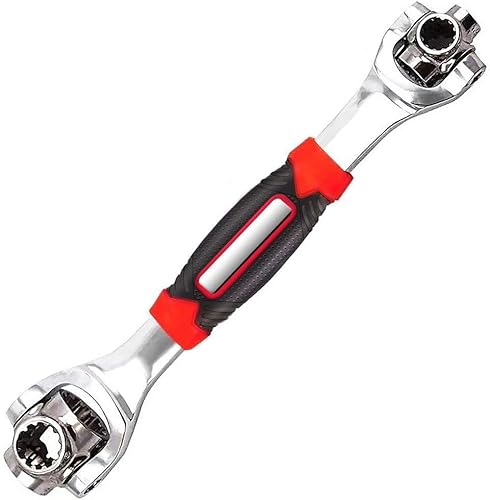
Top-Rated Universal and Adjustable Wrench Options for Your Toolkit
Explore the best versatile wrenches for home and auto repairs. Compare multi-tool designs, adjustable sets, and ratcheting options to find the right tool for yo
Read comparison →